
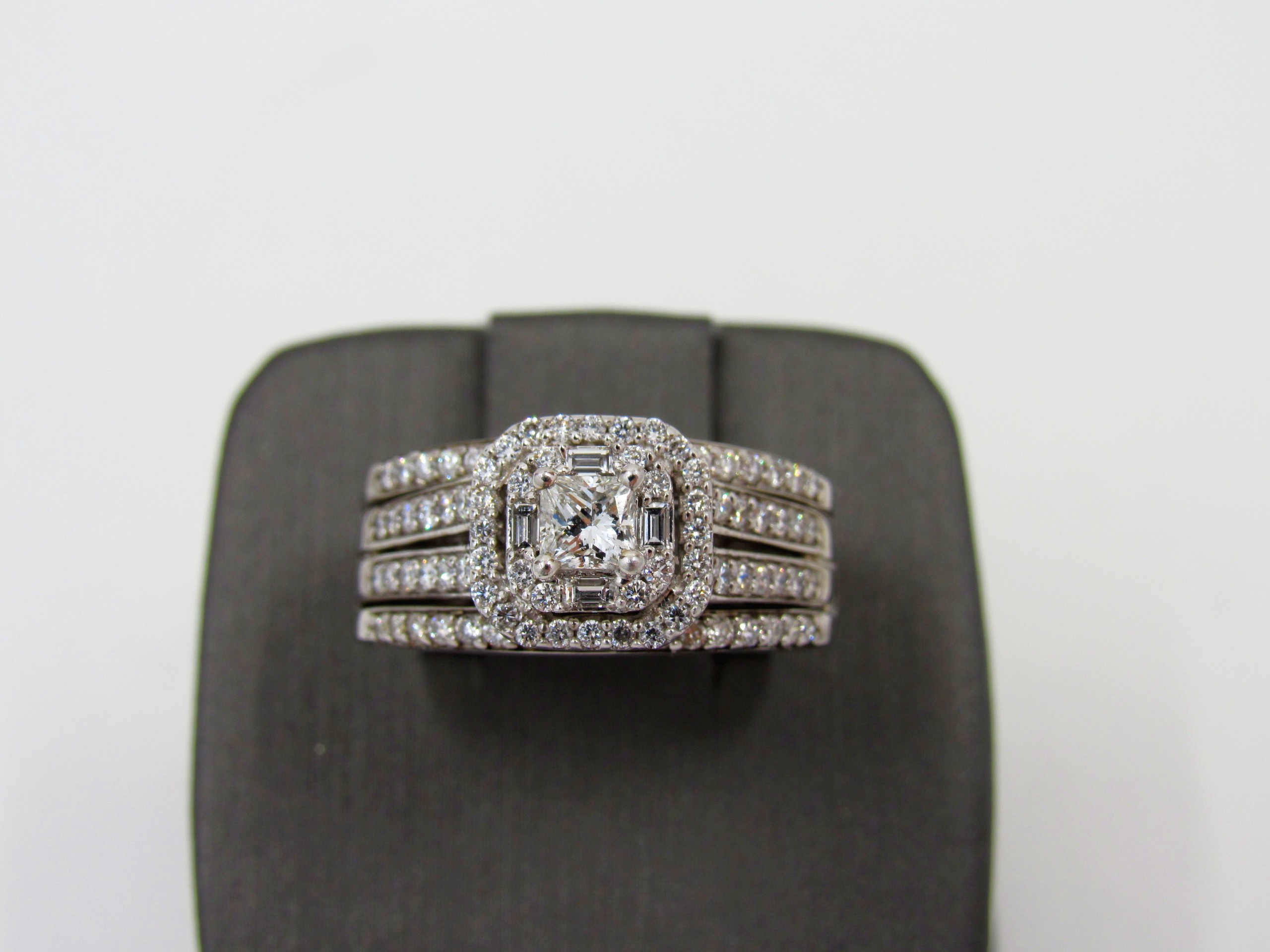
It usually starts on the underside of the band. A faint warmth, then a definite yellowish cast, and eventually a ring that does not match the earrings it was bought with.
People arrive at the counter worried they were sold something fake. They were not. Here is what is actually going on.
White Gold Is Not Naturally White
This is the fact nobody is told at the point of sale, and it explains everything.
Gold is yellow. To make white gold, yellow gold is alloyed with paler metals to lighten it — but the result is not the bright, cool white people associate with white gold. It is a soft, slightly greyish, faintly warm colour.
So white gold jewelry is finished with a thin plating of rhodium, a bright white metal from the platinum family. That plating is what gives a new white gold ring its crisp, mirror-white look.
Rhodium plating is a surface finish. Like any surface finish, it wears.
Why It Wears Where It Does
The underside of a ring goes first because that is the part in constant contact with your other fingers, your steering wheel, your keyboard, your shopping bags. The top, which touches less, keeps its finish longer. That uneven wear is why a ring often looks fine from above and obviously warm from underneath.
How fast it happens varies enormously between people. Somewhere between one and three years of daily wear is typical, but we see rings that need re-plating annually and rings that go five years. Things that speed it up:
- Hand sanitiser and frequent hand-washing — a genuine factor since 2020
- Chlorine, in pools and in cleaning products
- Skin chemistry, which varies more than people expect
- Lotions, perfumes and hairspray
- Manual work, gardening and gym use
The Fix: Re-Plating
The ring is cleaned thoroughly, polished, and a fresh layer of rhodium is applied. It comes back bright white.
It is routine maintenance, not a repair, and it is the right moment to have the prongs and setting checked at the same time — the ring is already off your finger and on the bench, so the inspection costs nothing extra in time.
We do this in-house at both Bakersfield stores, so the ring does not get posted anywhere.
What You Should Not Do
Do not scrub it. Abrasives and toothpaste will take the remaining plating off faster.
Do not assume it is fake. A yellowish cast on white gold is evidence that it is real gold underneath — which is precisely why it shows through.
Do not ignore it indefinitely. Once the plating is gone, the bare alloy is exposed. It is not dangerous, but some people react to the nickel in certain white gold alloys once the rhodium barrier wears away. If a ring has started irritating your skin, that is often the reason.
How to Make It Last Longer
Take the ring off for cleaning, swimming and the gym. Put jewelry on last, after lotion and perfume. Rinse and dry it if it has been in a pool. None of this stops wear, but it slows it noticeably.
If You Are Tired of the Cycle
Some people decide re-plating every couple of years is simply not for them. Two honest alternatives:
Platinum. Naturally white, no plating, never needs it. It develops a soft patina rather than losing colour, and that patina can be polished back. It costs more up front and it ends the maintenance question permanently.
Let it go warm. Unplated white gold is not unattractive — it is a soft, slightly antique white that some people prefer once they see it. If you like it, stop plating it. Nothing bad happens.
More on how each metal behaves: 14k vs 18k vs platinum.
Bring It In
Walk into either Bakersfield store and we will look at it with you, tell you whether it needs plating or just a clean, and quote it on the spot. No appointment needed.
Rosedale Highway — (661) 587-9298
Ming Avenue — (661) 834-0824
While you are thinking about upkeep: how to care for fine jewelry.

Leave A Comment